The Death of the Bachelor? Why Micro-Credentials Are the New Resume Currency
The classic "one-size-fits-all" university degree is losing its monopoly. A massive trend in the e-learning market is the rise of "Micro-Credentials" and "Nanodegrees." In 2021, the education market analysts HolonIQ expected the market for these short, highly specialized certificates to double within three to five years. The reason: Employers are increasingly hiring based on skills, not titles.

The Inflation of Titles vs. the Precision of Skills
For decades, the rule was: If you want a career, you need a bachelor's or master's degree. But this model has weaknesses. A bachelor's degree takes three to four years, an eternity in the tech world. According to the World Economic Forum's Future of Jobs Report 2025, workers can expect 39% of their existing skills to be transformed or become outdated between 2025 and 2030. Some of what you learn in your first semester may already be outdated by the time you graduate.
This is where Micro-Credentials come into play. These are digital certificates that certify specific competencies (e.g., "Data Visualization with Tableau" or "Agile Project Management") in a short time (weeks or months).
According to the education market analysts HolonIQ (2021), the market for micro and alternative credentials is still small compared to formal degrees, but growing fast.
The paradigm shift is palpable: Companies like IBM and Accenture have removed the requirement for a university degree from many job postings, and Google treats its own Career Certificates as the equivalent of a degree in recruiting.
"Stackable Degrees": Your Studies Using the Building Block Principle
Perhaps the most exciting development for students is the merging of both worlds: Stackable Degrees (stackable qualifications).
Instead of enrolling in a monolithic degree program for 4 years, you complete individual Micro-Credentials:
- First, a certificate in "Python Basics" (3 months)
- Then a Nanodegree in "Data Science" (6 months)
- Finally, a specialization in "Machine Learning" (4 months)
At the end, these modules can be recognized as part of a full degree, or stand alone as proof of your skills.
The Advantages of the Modular Approach
- Flexibility: Start anytime, pause anytime
- Relevance: Learn exactly what you need right now
- Speed: Acquire job-relevant skills in weeks, not years
- Cost Efficiency: Pay only for what you actually need
- Stackability: Combine certificates into larger qualifications
Skills-Based Hiring: The New Reality
The shift from "degree-based hiring" to "skills-based hiring" is accelerating:
Companies Leading the Change
- Google: Offers its own Career Certificates and treats them as the equivalent of a degree in recruiting
- IBM: Announced in January 2021 that it had removed bachelor's degree requirements from more than half of its US job openings
- Accenture: Reduced the share of IT job postings that require a bachelor's degree from 54% (2017) to 43% (2021)
- Apple and Google: Still ask for a degree in most IT job postings, but the share fell between 2017 and 2021 from 88% to 72% at Apple and from 93% to 77% at Google
The figures on job postings come from an analysis by the Burning Glass Institute (2022).
What This Means for You
Your resume of the future won't just list one degree; it will showcase a portfolio of specific, verified skills. Each Micro-Credential is a proof point that you can do something specific.
What the Numbers Say
According to HolonIQ (2021), spending on micro and alternative credentials was around 10 billion US dollars in 2019, compared to 2.2 trillion US dollars on formal degrees. HolonIQ expected the micro-credential market to double within three to five years.
When LinkedIn launched its Skill Assessments in 2019, it reported early results showing that candidates who completed them were around 30% more likely to get hired. LinkedIn has since discontinued Skill Assessments and announced that the badges would be removed from profiles in 2024.
In a SHRM survey published in 2022, 90% of HR professionals said that people with alternative credentials bring value to the workplace.
How to Build Your Stackable Portfolio
- Identify your career goal: What skills does your dream job require?
- Map the learning path: Which Micro-Credentials build toward that goal?
- Start with fundamentals: Begin with foundational certificates
- Stack strategically: Add specialized credentials that complement each other
- Document everything: Keep a portfolio of all your verified skills
Platforms for Micro-Credentials
Industry Leaders
- MOOC Platforms: University and company certificates from leading providers
- Professional Certificate Programs: Industry-recognized credentials
- Online Learning Platforms: Skills-focused learning paths
- University Online Programs: Accredited degree programs
Find the right platform for your goals at StudyOnline.now
University Programs
Many traditional universities now offer Micro-Credential programs that can be stacked toward full degrees. Check if your target institution offers this flexibility.
The Future: Hybrid Credentials
The smartest approach isn't choosing between traditional degrees and Micro-Credentials; it's combining both:
- Traditional degree for foundational knowledge and credibility
- Micro-Credentials for cutting-edge, specialized skills
- Continuous updates as your field evolves
Conclusion
The bachelor's degree isn't dead, but it's no longer the only path to career success. Micro-Credentials offer a flexible, targeted, and often faster route to demonstrating your skills. In a world where skills matter more than titles, your ability to continuously learn and certify new competencies becomes your greatest asset. The question isn't whether to embrace Micro-Credentials, but how to strategically stack them for maximum career impact.
Fuentes
Datos a fecha de: 14 October 2026
- Four Scenarios and the $10B Micro and Alternative Credential Market (2021), HolonIQ, consultado el 16 October 2026
- The Emerging Degree Reset: How the Shift to Skills-Based Hiring Holds the Keys to Growing the U.S. Workforce (2022), Burning Glass Institute, consultado el 16 October 2026
- Announcing Skill Assessments to Help You Showcase Your Skills (2019), LinkedIn, consultado el 16 October 2026
- Skill Assessments: no longer available, LinkedIn Help, consultado el 16 October 2026
- SHRM Report: Survey Finds a Rise of Alternative Credentials in Hiring (2022), Society for Human Resource Management (SHRM), consultado el 16 October 2026
- The Future of Jobs Report 2025: Digest, World Economic Forum, consultado el 16 October 2026
- European Digital Credentials for Learning, Europass, European Commission, consultado el 16 October 2026
- A European approach to micro-credentials (Council Recommendation of 16 June 2022), European Commission, European Education Area, consultado el 16 October 2026
Este contenido se ha creado con ayuda de IA, sobre todo en la investigación y la redacción previa. Revisión y aprobación por nuestra redacción.
Sobre el autor
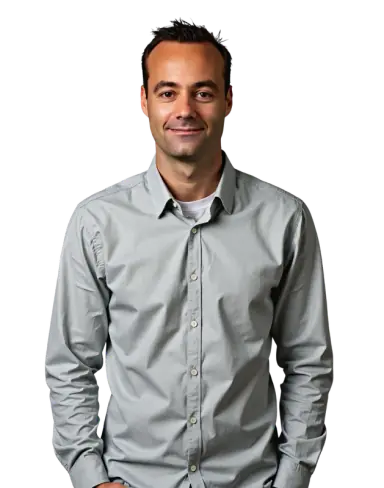
Ramon Tissler
Founder & CEO
Ramon Tissler is the founder and CEO of StudyOnline.now. With over 25 years of experience in the education sector, he previously founded and led College Contact (1998-2020), a German education agency for international study programmes. His mission is to make finding the right online degree simpler, faster, and more accessible than ever before.