AI as Personal Tutor: How Intelligent Systems Revolutionize Learning
Artificial Intelligence marks the end of "one-size-fits-all" education. Market researchers expect the AI education market to grow by 17.5 to 25.9% per year, driven by clear benefits: adaptive learning systems identify knowledge gaps individually and close them immediately.
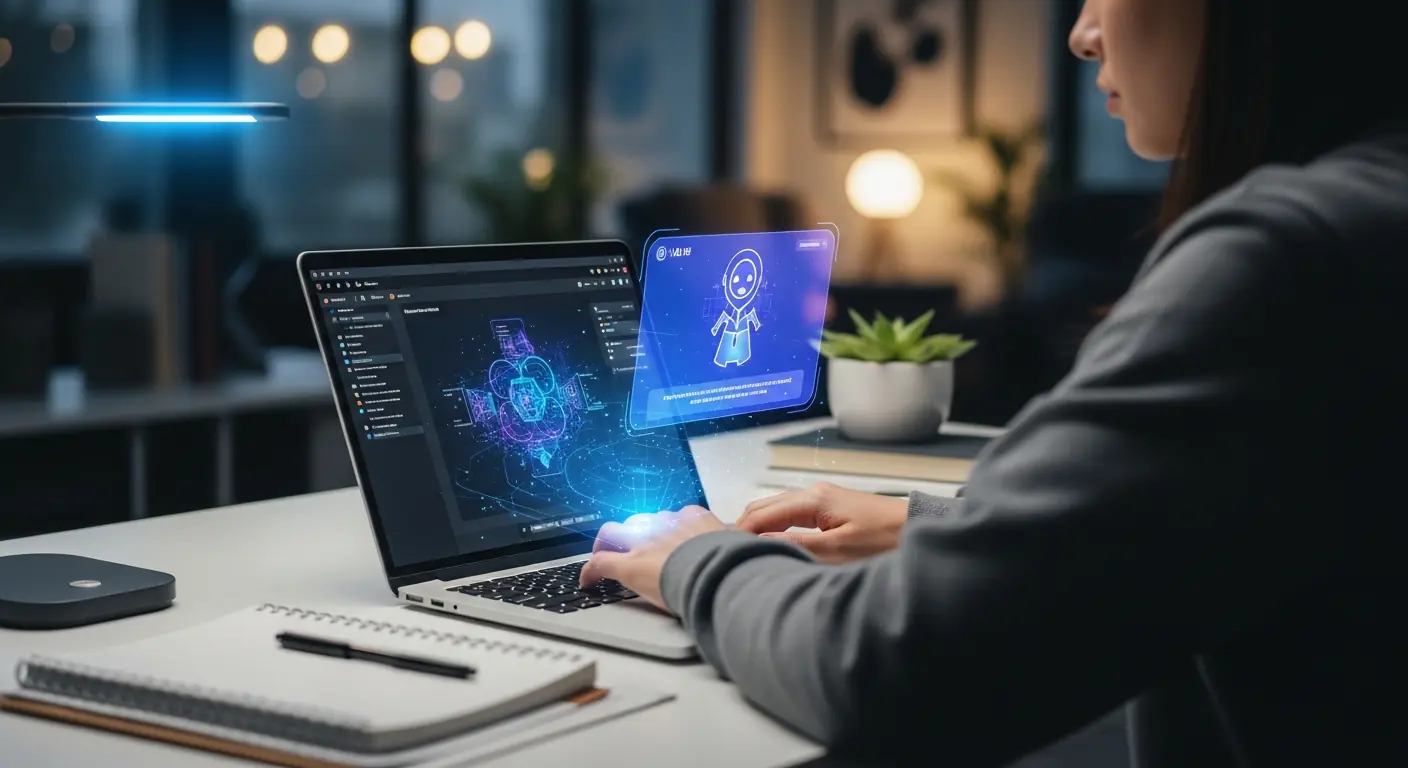
Market Development: The Boom of Intelligent Education
Artificial Intelligence (AI) marks the end of "one-size-fits-all" education. Market researchers expect the AI education market to grow by 17.5 to 25.9% per year, driven by clear benefits: adaptive learning systems identify knowledge gaps individually and close them immediately. For students, this means: Those who use AI not as a "cheating tool" but as a 24/7 tutor can save time and learn more efficiently. In a randomized study at Harvard University (Kestin et al., 2025), students learned significantly more in less time with an AI tutor built on proven teaching principles than in an active-learning class. A study with nearly 1,000 high school students in Turkey (Bastani et al., 2025) shows the flip side: students who practiced with a ChatGPT-like assistant without safeguards later scored 17% lower on an exam without AI than students who never had access.
The times when AI was only a topic for tech companies are over. Today, intelligent systems are at the heart of modern education, and the market reflects this.
The forecasts differ widely because market researchers define the market differently. According to MarketsandMarkets (2024), the global AI in Education market will grow from 2.21 billion USD (2024) to 5.82 billion USD by 2030, an average annual growth rate (CAGR) of 17.5%. Grand View Research (2026) expects growth from 8.3 billion USD (2025) to 57.2 billion USD by 2033, a CAGR of 25.9%.
How AI Makes Learning Personal
The great promise of AI in education is personalization. Unlike traditional teaching, where everyone learns the same content at the same pace, AI adapts to each individual.
How adaptive learning works:
- Diagnosis: AI analyzes your current knowledge level through tests and interactions
- Adaptation: Content and difficulty are automatically adjusted to your level
- Gap filling: Weaknesses are identified and specifically addressed
- Optimization: Learning paths are continuously optimized based on your progress
Practical Examples of AI in Education
Intelligent tutoring systems: Platforms like Carnegie Learning (MATHia) or Squirrel AI offer AI tutoring systems that adapt exercises to each learner, explain concepts and give immediate feedback, around the clock.
Automated essay evaluation: AI tools can evaluate texts in seconds and provide constructive feedback on structure, argumentation, and language.
Adaptive learning platforms: Some online learning platforms already use AI to adjust exercises in real time based on user behavior.
Language learning: Apps like Duolingo use AI to choose exercises that match your current level.
What This Means for Your Studies
AI in education is not about replacing human teachers but about supporting them. The best programs combine AI-supported personalization with human mentoring and peer learning.
When choosing your online program, pay attention to:
- Does the platform use adaptive learning technologies?
- Is there AI-supported feedback on assignments?
- Are intelligent tutoring systems integrated?
- Is personalization transparent and comprehensible?
How to Use AI Effectively as a Student
- Use AI as a learning partner: Ask questions, have concepts explained, get feedback
- Combine AI with traditional methods: AI supplements but does not replace human interaction
- Be critical: AI is not infallible; question answers and verify information
- Leverage personalization: Use adaptive features to optimize your learning path
- Stay ethical: Use AI for learning, not for completing assignments you should do yourself
The Future: AI and Human Intelligence Together
The future of education lies not in choosing between AI and humans, but in intelligent combination. AI takes over routine tasks like practice exercises and quick feedback, while human teachers focus on mentoring, critical thinking, and social skills.
For you as a student, this means: Those who learn to use AI effectively today have a clear advantage, both in studies and in their later career.
Conclusion
Artificial Intelligence is revolutionizing how we learn. Adaptive systems, intelligent tutors, and personalized learning paths are no longer science fiction but reality. Those who use AI as a 24/7 learning partner learn more efficiently, close knowledge gaps faster, and are better prepared for the demands of the digital work world. The best investment in your education: Learn to learn with AI.
Sources
Information as of: 8 October 2026
- AI in Education Market: Global Forecast to 2030, MarketsandMarkets, accessed on 16 October 2026
- AI in Education Market Size, Share and Trends Report 2026 to 2033, Grand View Research, accessed on 16 October 2026
- The 2 Sigma Problem: The Search for Methods of Group Instruction as Effective as One-to-One Tutoring (1984, PDF), Benjamin S. Bloom, Educational Researcher, accessed on 16 October 2026
- AI tutoring outperforms in-class active learning: an RCT at Harvard (2025), Kestin u. a., Scientific Reports, accessed on 16 October 2026
- Generative AI without guardrails can harm learning: Evidence from high school mathematics (2025), Bastani u. a., PNAS, accessed on 16 October 2026
- How artificial intelligence will impact K-12 teachers (2020), McKinsey & Company, accessed on 16 October 2026
- MATHia: AI-powered math software with personalized feedback, Carnegie Learning, accessed on 16 October 2026
- Learning how to help you learn: Introducing Birdbrain (2020), Duolingo Blog, accessed on 16 October 2026
This content was created with the help of AI, mainly for research and first drafts. Reviewed and approved by our editorial team.
About the Author

Ramon Tissler
Founder & CEO
Ramon Tissler is the founder and CEO of StudyOnline.now. With over 25 years of experience in the education sector, he previously founded and led College Contact (1998-2020), a German education agency for international study programmes. His mission is to make finding the right online degree simpler, faster, and more accessible than ever before.